
English
Views: 0 Author: Site Editor Publish Time: 2026-10-15 Origin: Site


Have you ever brought a beautiful, vibrant houseplant home, only to watch its leaves inexplicably fade and drop just weeks later? Many enthusiastic plant owners focus entirely on sunlight and fertilizer. They completely ignore how container materials impact root health. Choosing the wrong vessel can silently ruin your soil moisture balance and lead to a slow, frustrating decline.
Fortunately, modern manufacturing has transformed the humble synthetic container into a highly functional, stylish piece of home decor. In this comprehensive guide, we will break down exactly how to match specific indoor plants with the ideal resin pots. By understanding the engineering behind these vessels, you can ensure vigorous botanical growth and a stunning interior aesthetic.
Moisture Retention: Synthetic containers hold moisture significantly longer than porous materials like unglazed terracotta. This characteristic creates the optimal environment for tropical and moisture-loving houseplants that typically suffer in dry indoor air.
Ease of Mobility: Utilizing a lightweight polymer container is the most practical choice for large, mature floor plants. It allows you to safely move heavy botanical specimens for cleaning, repotting, or chasing seasonal sunlight without risking back injury.
Low Maintenance: Sub-irrigation systems take the guesswork out of daily plant care. These engineered setups are a lifesaver for busy individuals and highly transpirational plants.
Aesthetic Upgrade: Contemporary manufacturing techniques ensure you never have to sacrifice interior design style. Modern matte and textured finishes effortlessly mimic the premium look of expensive ceramics, concrete, or carved wood.
Recent market analyses reveal a massive shift in consumer preferences within the indoor horticulture industry. As urban living spaces become more compact and remote work blurs the lines between home and office, the demand for low-maintenance, aesthetically pleasing plant containers has surged. Horticultural experts and interior designers note a growing preference for eco-friendly polymers over traditional heavy ceramics.
This shift is largely driven by rapid advancements in injection molding and 3D texturing techniques. Today, high-quality synthetic planters are no longer cheap, temporary nursery staples. They are engineered micro-climate controllers that fit seamlessly into modern biophilic interior designs. Consumers now prioritize durability, water-efficiency, and sustainable manufacturing, making advanced resin pots the leading choice for modern indoor jungles.
When establishing an indoor garden today, the material of your botanical containers dictates the micro-climate of your soil. Understanding the physical properties of these materials is the first step toward professional-level plant care.
Unlike terracotta, which is highly porous and actively wicks moisture away from the soil, high-density plastic acts as an impermeable barrier. This non-porous nature prevents rapid water evaporation from the sides of the container. In climate-controlled homes where winter central heating or summer air conditioning drastically reduces ambient humidity, this solid barrier acts as a protective shield. It maintains an even, comforting moisture level throughout the root zone. Consequently, this reduces how often you need to reach for the watering can and prevents delicate fine root hairs from crisping up.
From an engineering standpoint, high-density polyethylene and polypropylene resin blends exhibit excellent impact resistance. Imagine a curious pet knocking a pot off a high windowsill. Unlike clay or ceramic, which will shatter into dangerous sharp shards upon impact, polymer pots absorb the kinetic energy and bounce. This inherent flexibility makes them a far safer choice for dynamic households. Furthermore, the slight pliability of the walls makes the eventual repotting process much easier. You can gently squeeze the sides to release a root-bound plant without tearing the fragile root ball.
Advancements in injection molding have completely revolutionized container aesthetics. Modern manufacturing allows horticultural plastics to replicate the visual weight and texture of stone, woodgrain, or premium glazed ceramic at a fraction of the cost. Indoor gardeners can now maintain a cohesive, high-end interior design across dozens of plants without facing a prohibitive financial investment.
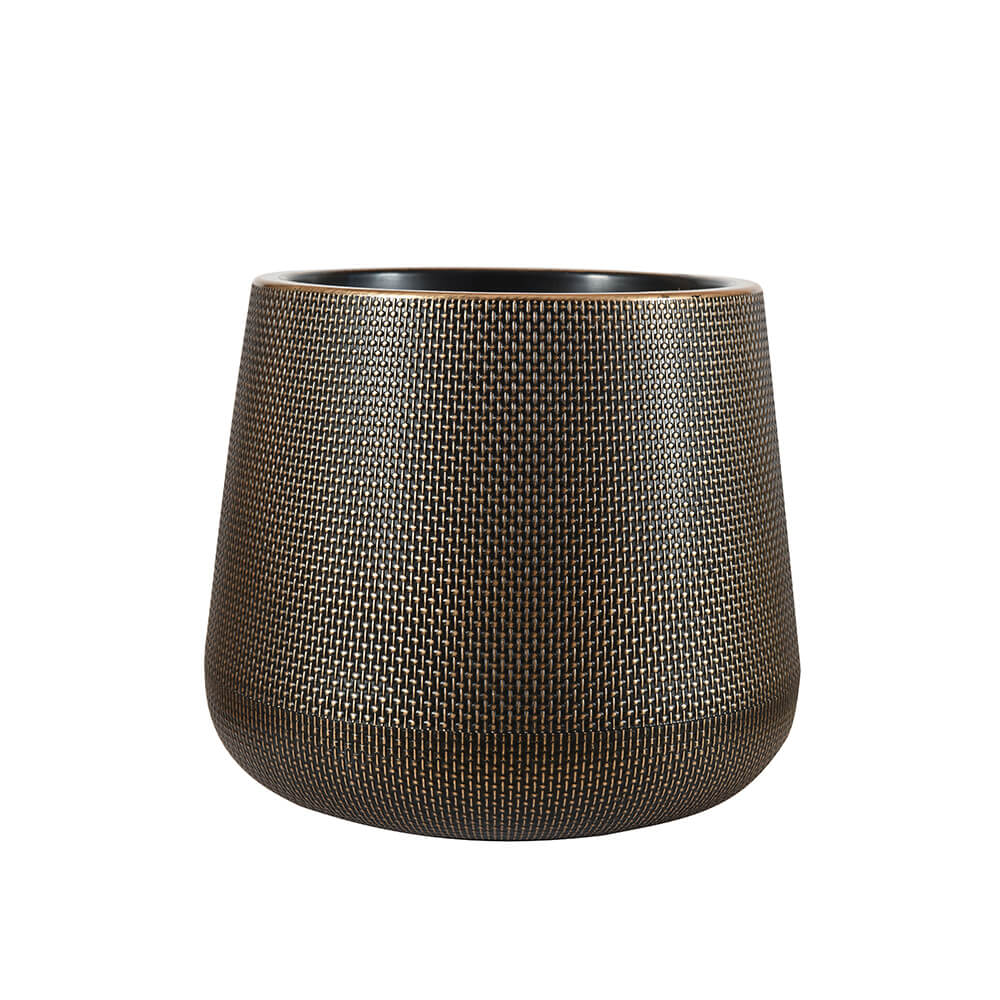
One of the most practical applications of synthetic materials in indoor gardening is drastic weight reduction. Wet potting soil is remarkably dense, weighing approximately 40 pounds per cubic foot. When you add the heavy, thick walls of a traditional ceramic container to that equation, moving a mature plant becomes a genuine physical hazard. Utilizing a lightweight plastic planter solves this logistical nightmare entirely.
Architectural floor plants require massive volumes of soil to support their extensive, sprawling root systems. Picture trying to drag a massive 6-foot Fiddle Leaf Fig across delicate hardwood floors to reach the shower for a leaf wash. A mature Monstera deliciosa can easily become unmanageable in clay. By opting for a synthetic container, you ensure that the primary weight comes only from the soil and the plant itself. This makes it significantly easier to rotate the plant weekly, a necessary practice to ensure even growth toward the light and prevent the main trunk from leaning awkwardly.
Trailing species like Pothos and various vining Philodendrons are frequently displayed in delicate macrame hangers or placed on high floating shelves. Heavy ceramic pots place unnecessary tensile strain on ceiling hooks and shelf brackets, posing a serious structural risk. Synthetic pots mitigate this danger, allowing you to hang lush, cascading vines securely above your living space without worrying about hardware failure.
Many indoor gardeners cultivate fruiting plants, such as dwarf Meyer lemons or tropical Hibiscus, which thrive when spending the warm summer months outdoors on a sunny patio. Transitioning these plants twice a year requires heavy lifting and carrying. Weight-reduced pots make this seasonal migration efficient and safe for your lower back. Meanwhile, UV-resistant polymer blends ensure the container will not degrade, fade, or crack under the harsh summer sun.
Maintaining consistent soil moisture remains one of the most challenging aspects of indoor horticulture. Fluctuating wildly between extreme drought and heavy, muddy saturation causes severe cellular stress in sensitive plants. Modern self-watering planters utilize a brilliant sub-irrigation system. Featuring a hidden water reservoir at the base, these Taizhou factory-direct engineered setups rely on natural capillary action to deliver steady, measured hydration directly to the root zone.
Specifically, species originating from the understory of tropical rainforests have high transpiration rates and thin leaf cuticles. They are notorious for drooping dramatically the very moment their soil dries out. These expressive species absolutely thrive in automatic irrigation setups. The sub-irrigation reservoir ensures that the lower feeder roots always have access to a gentle moisture supply. This eliminates the stressful wilting cycle and prevents those unsightly brown, crispy leaf edges.
Ferns, particularly the lush Boston Fern and the delicate Maidenhair Fern, demand constant and even dampness. Traditional top-watering often leaves the lower soil bone-dry while accidentally saturating the crown, rapidly leading to fatal crown rot. A sub-irrigation system pulls moisture upward. This creates a highly humid, perfectly balanced micro-climate within the soil matrix that flawlessly mimics the damp forest floors where these ancient plants naturally evolved.
Culinary herbs grown indoors typically reside on hot, sunny kitchen windowsills where soil moisture evaporates at an accelerated rate. Basil and mint are highly water-dependent. They will quickly turn bitter or halt foliage production entirely if subjected to drought stress. Utilizing an automated moisture system keeps these culinary staples perfectly hydrated, ensuring continuous, tender green growth ready for your next meal.
Interior landscaping is not merely about plant health; it is fundamentally about spatial aesthetics. The container you choose acts as the visual frame for your botanical art. A modern plastic round flower pot, typically characterized by clean geometric lines, smooth curves, and elegant matte finishes, serves as an excellent foundational piece for contemporary home decor.
For a sleek, modern aesthetic, contrast the smooth, uniform curves of a Nordic-style pot with plants that exhibit strict, vertical growth habits. The Snake Plant and ZZ Plant feature rigid, highly architectural foliage. Placing these structured plants in a minimalist, unadorned container draws the eye directly to the striking silhouette of the plant. This pairing fits seamlessly into mid-century modern, industrial, or minimalist interior designs.
While succulents are traditionally associated with porous terracotta, they can absolutely thrive in modern synthetic containers if potted with intention. The stark, geometric shapes of cacti look incredibly striking against a matte black or pristine white finish. However, because the walls retain moisture, it is imperative to use an ultra-chunky, heavily aerated soil mix rich in pumice or coarse perlite. This ensures rapid drainage and prevents root rot in these arid-climate species.
The versatility of polymer dyes allows for precise, intentional color matching in interior design. Matte black or charcoal containers anchor a bright room and suit industrial aesthetics perfectly. In contrast, pure white or muted pastel pots integrate effortlessly into airy, Scandi-Nordic styling. By standardizing the color palette of your containers, you can unify a chaotic collection of different plant species into a single, cohesive design element.
In contrast to flat, minimalist designs, spaces that require a touch of traditional elegance or vintage charm might find smooth finishes too sterile. This is precisely where the embossed plastic planter excels. By utilizing advanced 3D molding techniques, manufacturers can now create intricate, textured patterns that brilliantly mimic hand-carved stone, woven rattan, or antique glazed ceramics, all without the associated back-breaking weight and fragility.
Highly textured, bushy plants pair beautifully with the complex visual patterns of an embossed container. The arching, prolific foliage of a Spider Plant or the dense, wildly patterned leaves of a Chinese Evergreen complement the raised, tactile designs on the pot. The physical texture of the container adds profound depth and dimension to an otherwise empty corner of a room, creating a focal point that looks distinctly premium and curated.
Plants cultivated specifically for their vibrant, multi-colored leaves rather than their blooms require a container that matches their theatrical presence. Pairing deep purple, silver, or neon pink foliage with a vintage-style textured planter creates a striking visual contrast. The ornate detailing of the pot elevates the perceived value of the plant, making it look like a living museum piece rather than just another houseplant.
Transitioning your indoor garden to synthetic containers requires a slight, yet vital, adjustment in your daily plant care routine. While these containers offer exceptional durability and aesthetic versatility, their physical properties differ significantly from porous clay. Understanding how a closed-wall environment interacts with soil, water, and air is the true foundation of evidence-based horticulture.
The absolute most critical factor in indoor gardening is preventing an oxygen-depleted environment at the root zone. Because the walls are impermeable, moisture cannot escape through the sides. While this retention is highly beneficial for tropicals, it also means that excess water has nowhere to go if it pools at the bottom.
Pooling water rapidly displaces vital oxygen in the soil, leading to root suffocation and creating the perfect breeding ground for the pathogens responsible for root rot. Therefore, proper drainage is non-negotiable. Always inspect the base of your chosen vessel. If it lacks pre-drilled holes, you can easily create them using a standard power drill. Alternatively, employ the cachepot method: keep your plant in a thin plastic nursery pot with drainage, place it inside the decorative hole-free planter, and remove the inner pot to water it in the sink.
Because these containers retain moisture so efficiently, using standard indoor potting soil straight from the bag can sometimes lead to a soggy, over-saturated mess. Standard soils are often heavy in peat moss, which acts like a dense sponge. To balance this, you must actively increase the large air spaces within your soil matrix. Imagine the satisfying crunch of adding coarse, airy amendments to your mix; this ensures that even when the soil is wet, oxygen can still reach the root system.
For Tropicals: Blend 50 percent potting soil, 30 percent orchid bark, and 20 percent perlite. The bark mimics the loose forest floor, preventing compaction.
For Moisture Lovers: Mix 60 percent potting soil, 20 percent coco coir, and 20 percent pumice. This retains even dampness while allowing necessary gas exchange.
For Arid Plants: Combine 30 percent potting soil with 70 percent pumice, coarse sand, or gravel. This guarantees rapid water flow and prevents prolonged wetness.
The most common mistake plant owners make when switching materials is stubbornly maintaining their previous watering schedule. Plants housed in non-porous walls require significantly less frequent watering than those in unglazed clay. Do not water on a strict calendar schedule. Instead, adopt a tactile, condition-based approach. Insert your index finger two inches deep into the soil. If it feels moist, step away and wait a few more days.
Furthermore, you must account for seasonal environmental changes. During the active growing season in spring and summer, increased sunlight and heat will speed up transpiration, requiring more frequent watering. Conversely, during the fall and winter dormancy periods, plant metabolism slows to a crawl. Combined with the moisture-locking properties of the container, the soil will take much longer to dry out, meaning you may only need to water half as often.
Making an informed purchasing decision requires objectively weighing practical functionality against your specific environmental conditions. Both materials have their rightful place in an indoor garden, but understanding their physical properties will dictate which is best suited for your lifestyle.
Feature | High-Quality Plastic Planters | Unglazed Ceramic & Terracotta |
|---|---|---|
Moisture Retention | High. Impermeable walls prevent side evaporation. | Low. Porous walls wick moisture away rapidly. |
Weight Profile | Extremely lightweight; easy to lift, rotate, and hang safely. | Heavy; difficult to transport when filled with wet soil. |
Durability | High impact resistance; shatterproof and highly pet-safe. | Fragile; prone to chipping or shattering upon impact. |
Ideal Application | Tropicals, large floor plants, hanging vines, busy owners. | Cacti, succulents, extreme dry-climate plants. |
If you are cultivating large floor plants, the combined weight of the soil and the plant is already substantial. Utilizing a synthetic container is a logistical necessity, allowing you to easily rotate the plant for even light exposure. Moreover, if your home environment features dry air due to aggressive winter heating, this material will seamlessly preserve vital soil moisture. On the other hand, unglazed ceramic is the superior choice only if you are a chronic over-waterer, or if you are exclusively housing desert cacti that demand rapid, bone-dry soil conditions.
Matching your specific plant to the right container is the foundational secret to indoor gardening success. Premium synthetic pots offer undeniable, practical benefits for your indoor jungle. From providing the consistent moisture that tropical plants crave, to eliminating the physical strain of moving massive floor plants, modern polymers are engineering marvels. By simply prioritizing proper soil drainage, amending your potting mix with aerating materials, and monitoring moisture levels with a tactile touch, any houseplant can thrive beautifully.
Are you ready to upgrade your living space with durable, stylish, and highly functional botanical vessels? Transform your indoor garden by exploring the premium collections at China Flower Pots (https://www.chinaflowerpots.com). Whether you need Nordic-style automated irrigation setups or vintage embossed designs, you will find the exact engineering and aesthetic match for your interior design needs.
No, the material itself does not cause root rot. Root rot is a fungal or bacterial infection caused by prolonged oxygen-depleted conditions in the soil, almost always due to overwatering. Because synthetic walls do not breathe like terracotta, water evaporates more slowly. If a pot lacks drainage holes, or if the soil mix is too dense, water will pool and suffocate the roots. As long as your container has proper drainage holes, you use a well-aerated potting mix, and you water only when the topsoil is dry, your plants will remain perfectly healthy.
Yes, absolutely, but you must adapt your horticultural approach. Succulents naturally grow in harsh, arid environments and require their root systems to dry out quickly and completely between waterings. Because these containers retain moisture, you must use a highly gritty, inorganic soil mix. A blend consisting of 70 percent inorganic material like pumice or perlite and only 30 percent organic potting soil is highly recommended. Additionally, you must strictly limit your watering frequency, ensuring the soil is completely bone-dry to the very bottom before providing another drink.
The term self-watering is slightly misleading; a more accurate engineering term is sub-irrigation. These specialized planters feature a separated reservoir at the very bottom of the container that holds excess water. Above this reservoir sits the soil and the plant root system. The water is delivered upward into the soil against gravity via natural capillary action. This is usually facilitated by a wicking string or a specialized soil channel that dips directly into the reservoir. This system provides consistent, measured moisture to the roots without over-saturating the topsoil.
Generally, yes, but it heavily depends on the quality of the manufacturing. Premium indoor and outdoor synthetic planters are treated with UV-resistant stabilizers during the injection molding process. This crucial step prevents the polymer chains in the material from breaking down when exposed to direct ultraviolet sunlight, ensuring the pot will not become brittle, crack, or fade in color over time. If you plan to transition your indoor plants to a patio for the summer, simply verify that the container is explicitly labeled as UV-resistant.
When used exclusively indoors, premium synthetic planters manufactured from high-density polyethylene or polypropylene can easily last for decades. Unlike outdoor environments where extreme temperature fluctuations and harsh sunlight slowly degrade materials, the stable, climate-controlled environment of a home preserves the structural integrity of the polymer indefinitely. They will not rust, rot, or organically degrade over time.
If the planter is kept indoors away from intense, direct sunlight, color fading is practically non-existent. Modern polymer dyes are integrated directly into the resin during the injection molding process, meaning the color goes all the way through the material rather than just sitting on the surface like paint. For pots placed in very bright, direct south-facing windows, choosing planters with built-in UV stabilizers will guarantee the color remains vibrant for years.


