
English
Views: 0 Author: Site Editor Publish Time: 2026-10-11 Origin: Site


Procuring commercial-grade landscaping supplies presents a significant challenge for nursery owners, landscape architects, and B2B distributors. Balancing aesthetic appeal with strict budget constraints demands a technical understanding of polymer manufacturing and global freight logistics. Recent market analyses reveal a massive industry shift. Procurement teams are rapidly moving away from heavy traditional ceramics, driven by skyrocketing international freight rates and a surging commercial demand for lightweight, shatterproof alternatives. Modern architectural projects now heavily favor weather-resistant polymers that mimic natural materials without the associated weight penalty. However, navigating wholesale pricing remains complex. Buyers must account for hidden fees, fluctuating shipping costs, and vastly different resin qualities.
Available products range from high-volume injection-molded plastics to heavy-duty rotational-molded resins. Each manufacturing method carries distinct price points, structural limits, and performance metrics. This technical guide serves as a comprehensive resource for decoding these wholesale costs. We will examine how variables like raw material volume, draft angles, mold complexity, and premium surface coatings directly impact your final landed price. Sourcing outdoor plant containers requires strategic planning. From standard growing pots to architectural decorative vessels, this breakdown provides bulk purchasers with an actionable roadmap to minimize procurement expenses while maximizing retail margins.
Baseline Price Ranges: Wholesale costs for basic injection-molded polypropylene pots typically start between $0.50 and $5.00 per unit. Premium commercial-grade options, manufactured via rotational molding with thicker walls, range from $15.00 to $50.00 or more based on exact dimensions.
The ROI of Premium Finishes: Investing in automotive-grade painted surface treatments significantly increases retail markup potential. These multi-layer finishes offer a luxurious, ceramic-like appearance alongside critical UV protection.
Hidden Logistical Costs: Freight charges, shipping volume efficiency, and Minimum Order Quantities dictate the true landed cost of bulk inventory far more than the factory gate price.
Engineering Complexity: Specialized geometric shapes require advanced steel tooling. Linear profiles cost slightly more to manufacture and ship, yet they remain highly sought-after for contemporary urban landscaping.
Grasping the baseline cost of raw inventory is the vital first step in procurement planning. The wholesale price of plastic garden vessels fluctuates based on the specific manufacturing technique and the sheer weight of raw polymer required. Currently, the commercial sector relies on two primary fabrication methods: injection molding and rotational molding.
Injection molding forces molten resin into a cavity under extreme pressure. This allows for the rapid, high-volume production of lightweight, flexible pots. Because of the rapid cycle times, these units are highly cost-effective. In contrast, rotational molding involves slowly rotating a heated mold on multiple axes. This process creates thicker, stress-free walls perfectly suited for harsh commercial environments, heavy root systems, and extreme temperature fluctuations.
Below is a technical pricing matrix for standard commercial planters based on current industry averages, assuming bulk container-load orders:
Planter Specification (Diameter) | Fabrication Method | Estimated Wholesale Cost (USD) | Primary Commercial Application |
|---|---|---|---|
6-inch to 8-inch | Injection Molded Polypropylene | $0.50 – $1.50 | Entry-level retail, temporary nursery propagation |
10-inch to 14-inch | Injection Molded Polypropylene | $2.00 – $5.00 | Standard garden centers, residential patios |
16-inch to 24-inch | Rotational Molded Polyethylene | $15.00 – $30.00 | High-end retail, hospitality sector, small commercial spaces |
24-inch to 36-inch+ | Rotational Molded LLDPE | $35.00 – $65.00+ | Municipal streetscapes, hotel lobbies, mature tree housing |
Note: These figures represent baseline factory costs before ocean freight, import tariffs, and custom finish applications. Prices remain subject to global petroleum market shifts and resin availability.
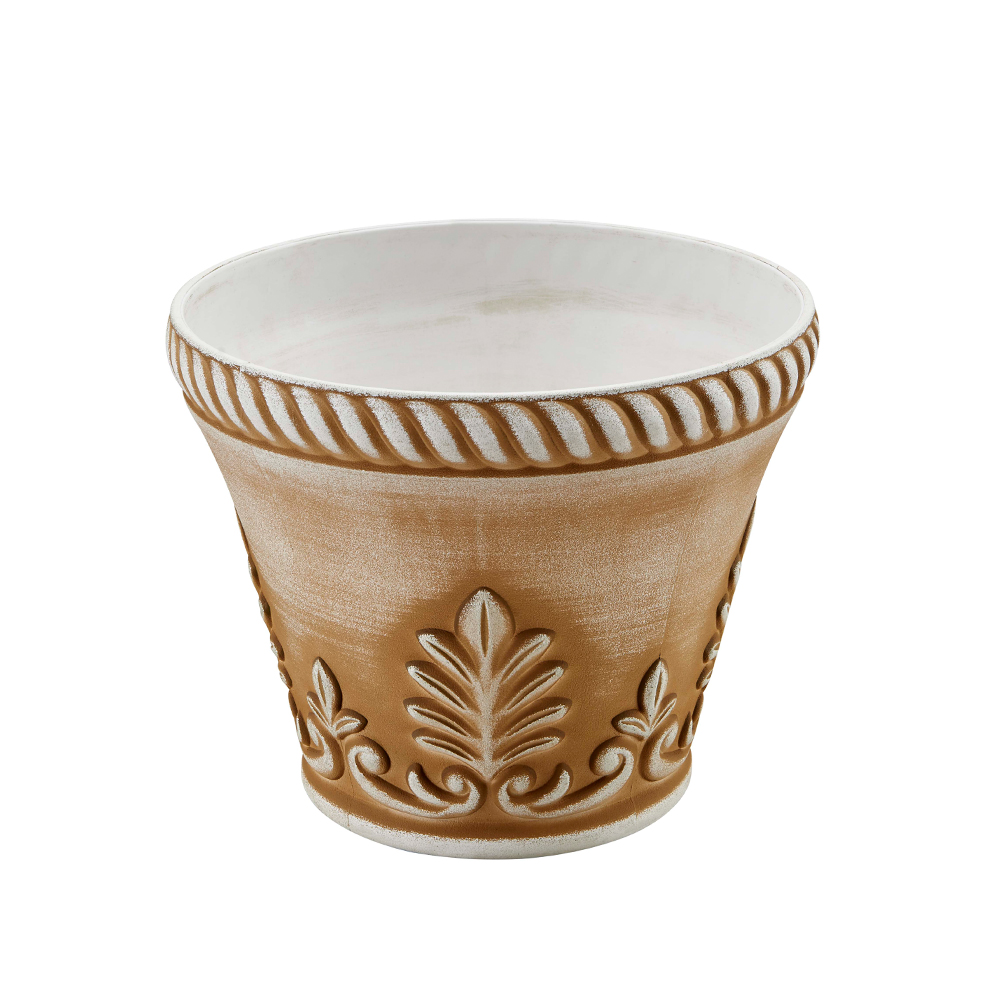
Understanding why factory prices vary allows procurement managers to negotiate effectively. Price fluctuations are directly tied to material density, engineering challenges, and production cycle times. Recognizing these variables ensures buyers select the exact product tier that aligns with their target demographic and structural requirements.
The most direct driver of a container's wholesale cost is the sheer volume of plastic polymer consumed during production. Industrial resins like Polypropylene and High-Density Polyethylene trade as global commodities. Fabricators calculate base costs strictly by the kilogram of resin used per unit.
When specifying large garden planters intended for public spaces, wall thickness becomes a critical safety factor. A commercial-grade vessel designed to hold a mature tree requires dense walls, often measuring 4mm to 6mm thick. This robust construction prevents the plastic from bowing or fracturing under the outward hydrostatic pressure of wet soil and aggressive root expansion. This exponential increase in raw material directly elevates the wholesale price point. Furthermore, thicker walls require extended cooling times inside the mold, which reduces daily factory output and slightly increases the overhead cost per unit.
Standard round pots are inherently economical to produce. The symmetrical, tapered cylindrical design allows for straightforward mold machining and rapid ejection during the manufacturing cycle. Symmetrical shapes also naturally distribute internal soil pressure evenly across the curved walls of the container.
Conversely, manufacturing a large rectangular garden planter introduces significant engineering hurdles. Long, flat thermoplastic sides are structurally prone to warping when filled with hundreds of pounds of damp earth. To counteract this physical limitation, engineers must design thicker walls, internal support ribbing, or reinforced corners directly into the steel mold. Tooling these complex geometric molds requires a much higher initial capital investment. While slower production times slightly elevate the per-unit cost, contemporary landscape architecture demands these clean, linear designs. Retailers find these geometric shapes command a premium price that easily absorbs the higher manufacturing expense.
Standard color-injected plastics often struggle to achieve high retail margins in a saturated garden supply market. While functionally superior, raw plastic can appear utilitarian. Premium surface treatments offer a strategic upgrade for B2B buyers looking to capture the high-end design market. The industry is currently witnessing massive demand for sophisticated finishes that disguise the polymer substrate.
A coated vessel differs fundamentally from basic molded containers. Instead of simply mixing dye pellets into the raw resin, factory technicians apply multi-stage exterior coatings. These specialized finishes replicate the heavy, luxurious texture of glazed ceramic, rustic terracotta, oxidized copper, or cast concrete. For retailers, the value proposition is undeniable. Design-conscious consumers gladly pay a premium for a product offering the sophisticated aesthetic of traditional heavy materials, combined with the lightweight, shatterproof practicality of modern engineering.
Beyond visual appeal, external paint applications serve a critical structural purpose. Untreated commodity plastics remain highly vulnerable to photodegradation. Prolonged exposure to ultraviolet rays breaks down polymer chains, causing the material to turn brittle, chalky, and visually faded.
Procuring a high-quality outdoor painted plastic flower pot effectively eliminates this issue through advanced chemical engineering. Reputable wholesale suppliers utilize automotive-grade polyurethane paints and specialized clear coats embedded with active UV inhibitors. This multi-layer barrier reflects and absorbs radiation before it penetrates the structural plastic beneath. Therefore, these planters maintain their structural integrity and vibrant color profiles for years, even in high-sun exposure environments like commercial rooftops and open plazas. For commercial landscapers, this guaranteed durability drastically reduces replacement cycles and lowers long-term maintenance budgets.
Navigating Minimum Order Quantities remains a frequent pain point for wholesale buyers. Manufacturers operate on razor-thin margins. They rely on massive volume to offset the fixed costs of heavy machine setup, complex mold changeovers, and calibrating automated paint sprayers. In the commercial supply sector, factories typically structure order minimums by the specific SKU, by the pallet, or by the full shipping container.
Order volume directly dictates the per-unit cost. Suppliers consistently offer sliding-scale pricing to incentivize larger inventory commitments. Here is a technical breakdown demonstrating how bulk pricing tiers function for a premium 24-inch commercial resin planter:
Order Volume | Pricing Tier | Estimated Unit Cost | Manufacturing Rationale |
|---|---|---|---|
100 - 499 Units | Tier 1 (Low Volume) | $28.50 | Absorbs high initial setup costs and manual warehouse handling. |
500 - 1,999 Units | Tier 2 (Standard Minimum) | $23.75 | Achieves standard production run efficiency and stable cycle times. |
2,000 - 4,999 Units | Tier 3 (High Volume) | $19.20 | Unlocks economies of scale and minimizes costly mold changeovers. |
5,000+ Units | Tier 4 (Contract Rate) | $17.50 | Allows continuous 24-hour machine operation and optimized resin purchasing. |
Experienced buyers often negotiate volume thresholds by consolidating their orders strategically. For instance, if a factory demands an excessively high minimum per paint color, try standardizing the base physical mold. Factories frequently lower the per-color threshold if the total unit volume for the specific physical shape remains high. Flushing paint lines on an assembly conveyor is significantly less labor-intensive than unbolting and swapping out multi-ton steel molds.
The factory gate price represents only one fraction of the total procurement equation. Inexperienced buyers frequently calculate potential profit margins based solely on the raw unit cost, only to watch those margins evaporate due to logistical and regulatory expenses. Building a profitable inventory requires anticipating these secondary expenses to establish an accurate landed cost.
Ocean freight stands as the most significant hidden cost in the planter industry. Because planters are inherently hollow structures, buyers essentially pay to ship empty air. With global logistics experiencing unpredictable rate spikes, optimizing cargo container space has shifted from a mere best practice to an absolute operational necessity.
To mitigate exorbitant freight costs, procurement teams must prioritize nestable designs. Planters engineered with a specific draft angle, usually tapering 5 to 8 degrees, stack deeply inside one another. Imagine unboxing a pallet only to discover the pots are permanently wedged together due to a poor draft angle design. This flaw wastes hours of labor and risks damaging the product during separation. A 40-foot high-cube shipping container might hold 10,000 highly nestable pots, but only 2,000 straight-walled, non-nestable cylinders. Always demand the exact nesting ratio and container loading schematics from your supplier before authorizing a bulk purchase.
When sourcing inventory internationally, import duties drastically alter the final landed cost. Plastic garden goods are classified under specific Harmonized System codes, frequently falling under 3926.90 for general plastic articles. Depending on the country of origin and active trade agreements, tariffs range anywhere from 3% to over 25% of the total commercial invoice value.
Buyers must also account for customs brokerage fees, port handling charges, and potential border inspection delays. Partnering with a supplier who maintains a flawless track record of export compliance and accurate commercial invoicing prevents catastrophic demurrage fees at the port of entry.
Selecting a manufacturing partner requires rigorous due diligence extending far beyond simply comparing price sheets. A reliable supplier guarantees consistent structural quality, precise delivery schedules, and responsive engineering communication. These factors ultimately protect your brand reputation in the marketplace.
When auditing potential wholesale vendors, scrutinize their manufacturing capacity and historical lead times. A factory running limited machinery might offer aggressively low prices, but they risk causing severe stockouts during the critical spring landscaping season. Procurement teams must request detailed documentation regarding factory Quality Control protocols. Verify if they perform full-capacity drop tests, accelerated UV weathering simulations, and ultrasonic wall-thickness consistency checks.
Crucially, never authorize a full production run without physically evaluating a pre-production sample. Requesting a sample serves as a strict quality audit. Execute a scratch test on the painted surface using a coin to simulate rough transit handling. Evaluate the sample for sidewall rigidity, finish consistency, and color accuracy. This ensures the chemical coating adheres flawlessly to the plastic substrate and will not flake off under commercial stress.
Securing inventory at a competitive wholesale rate is only half the battle. Optimizing your retail and distribution strategy is mandatory to truly maximize your Return on Investment.
Retailers can instantly elevate their average order value by merchandising bundled sets. Rather than selling single isolated units, package a massive statement container with two complementary medium-sized pots. This specific strategy accelerates inventory turnover and appeals directly to consumers designing cohesive outdoor living spaces.
Visual merchandising dictates perceived value. The market value of a premium polymer planter relies heavily on retail presentation. Display high-end painted resin models directly adjacent to actual ceramic or cast concrete equivalents. This positioning invites the consumer to physically interact with the product, immediately realizing it offers the exact same luxurious aesthetic while remaining remarkably lightweight. Highlighting this undeniable functional superiority allows retailers to confidently maintain premium price points.
Finally, distributors should diversify revenue streams by aggressively targeting local B2B commercial clients. Hospitality groups, municipal parks departments, and corporate campuses require massive volumes of planters that are strictly shatterproof to mitigate public liability. Establishing your brand as a reliable local distributor for high-durability, commercial-grade plastics generates lucrative, recurring contract sales.
Procuring wholesale plastic planters yields exceptional profit margins when executed with technical precision. While base factory prices range from a few cents to over fifty dollars, the final landed cost depends entirely on material density, manufacturing methods, and the application of automotive-grade finishes. Premium options, specifically multi-layer painted pots, consistently deliver superior overall returns by capturing the lucrative design-conscious demographic.
Stocking high-quality, weather-resistant inventory keeps commercial landscaping clients satisfied and virtually eliminates product return rates. However, procurement teams must meticulously calculate freight nesting efficiency and import duties before finalizing any bulk contract. By partnering with a transparent supplier, demanding rigorous physical samples, and implementing strategic merchandising, buyers can dominate the wholesale market. Ready to scale your inventory? Evaluate your specific project requirements and target demographics. For buyers seeking reliable manufacturing, high-quality resins, and premium finishes, explore the extensive catalog at China Flower Pots. From standard nursery lines to architectural rectangular vessels, find the exact specifications to maximize your procurement ROI today.
Order minimums vary significantly based on factory capacity. Overseas manufacturers typically require 500 to 1,000 units per specific color or style. This volume justifies the expensive paint line setup and automated spray calibration. However, domestic distributors or suppliers operating large warehouses may offer lower, pallet-based minimums for buyers unable to accommodate full ocean containers.
Reputable wholesale manufacturers utilize high-grade, UV-resistant polyurethane paints sealed with protective clear coats. These specialized automotive-grade coatings are chemically engineered to withstand prolonged exposure to intense sunlight. By reflecting harsh UV radiation, they prevent the underlying polymer substrate from degrading, ensuring the finish remains vibrant for multiple commercial seasons without chalking or peeling.
Due to their linear geometric footprint, rectangular planters rarely nest as tightly as traditional tapered round pots. This reduced stacking efficiency means buyers end up shipping more empty space, which frequently increases total freight costs by 15% to 30%. The exact financial impact depends on ocean freight rates, shipping distance, and how meticulously the factory engineers the draft angle for pallet optimization.
Yes, direct manufacturers provide extensive customization capabilities. Buyers can request precise Pantone color matching or bespoke faux-finishes, such as rusted corten steel or textured concrete. These custom runs are standard practice for bulk orders, provided the total purchase volume meets the factory's specific customization thresholds to cover the specialized paint mixing.
Absolutely. While the factory gate price of premium plastic can sometimes rival basic ceramic, the true cost savings occur in logistics and lifespan. Plastic planters weigh a fraction of ceramic, drastically reducing ocean freight and domestic trucking costs. Furthermore, plastic eliminates the 10% to 15% transit breakage rate typically associated with brittle ceramic imports, ensuring every unit you pay for actually reaches the retail floor.
For high-traffic commercial environments, High-Density Polyethylene and Linear Low-Density Polyethylene are the superior choices. Unlike standard Polypropylene, which is excellent for lightweight residential use, LLDPE manufactured via rotational molding offers unmatched impact resistance. It remains flexible enough to expand with freezing soil and aggressive tree roots without cracking, making it the required standard for municipal and architectural applications.


